

You’re standing in your yard thinking about that backyard transformation you’ve been dreaming about for years. Maybe you want a patio, some retaining walls, better planting beds, the whole deal.
So you start googling, and suddenly you’re drowning in titles. Landscape designer, landscape architect, landscape contractor, design-build firms. What do all these people actually do?
Most people assume these terms are interchangeable. They’re really not. The difference between a landscape designer and a landscape contractor affects everything from who you hire to how your project unfolds to what you end up paying. Let’s clear up the confusion.
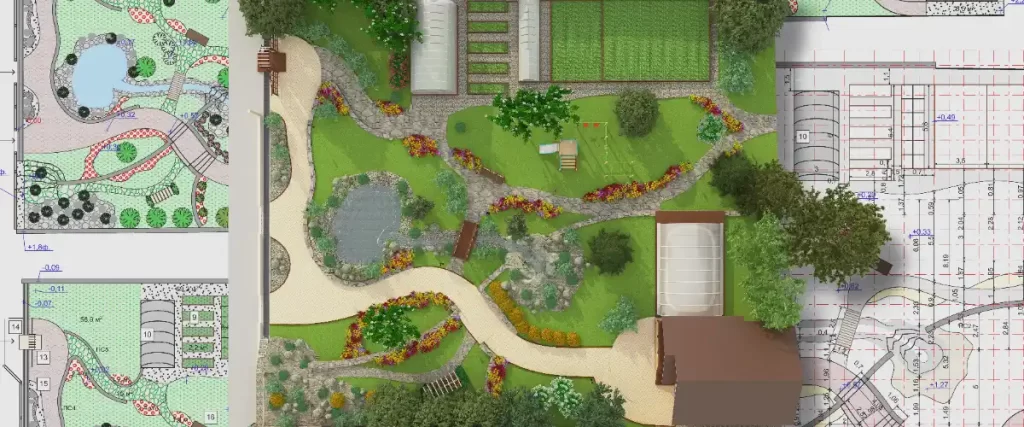
What Landscape Designers Actually Do
Landscape designers create the vision for your outdoor space. They’re the ones sketching plans, choosing plants, figuring out where that seating area should go, and making sure everything flows together visually. Think of them as the creative force behind your project.
Their expertise covers plant knowledge, design theory, spatial planning, and understanding how people use outdoor spaces. A good designer knows which plants thrive in your specific conditions, how to create visual interest through layering and texture, and how to make a small yard feel bigger through smart layout choices.
Some landscape designers focus purely on the aesthetic side. Others have technical knowledge about grading, drainage, and basic construction principles. The scope of what they handle varies quite a bit from person to person and company to company.
Here’s where it gets interesting. Landscape designers typically don’t need formal licensing in most states. They operate based on their knowledge, experience, and reputation.
Some have degrees in horticulture or landscape design. Others learned through years of hands-on work. The lack of licensing requirements means quality varies significantly across the profession.
Understanding Landscape Architects
Now landscape architects take things several steps further. These are licensed professionals who’ve completed specific educational requirements, passed rigorous exams, and maintain ongoing certification.
The licensing process exists because landscape architecture involves technical engineering and construction knowledge that affects safety and building codes.
A licensed landscape architect can design complex structures like retaining walls over a certain height, plan large-scale grading projects, create detailed construction documents, and stamp plans for permit approval. Many landscape architects work on commercial projects, public parks, and major residential installations.
The Council for Landscape Architectural Registration Boards oversees licensing requirements across different states. Each state has its own specific rules about what requires a licensed professional versus what unlicensed designers can handle.
In reality, many landscape architects do similar creative work as designers but with added technical capabilities. They understand soil engineering, structural requirements for hardscape features, proper drainage calculations, and how to develop plans that contractors can build from without guessing.
What Landscape Contractors Bring to the Table
While designers and architects create the plan, landscape contractors actually build it. They’re the boots on the ground turning drawings into reality. Contractors manage the construction phase, coordinate workers, source materials, operate equipment, and handle the physical labor.
Good contractors read plans, understand construction techniques, know local building codes, and have the expertise to solve problems that come up during installation.
Because trust me, problems always come up. The ground conditions differ from what anyone expected. That tree root is exactly where the patio needs to go. The drainage behaves differently from what the plan anticipated.
Experienced contractors adapt on the fly while staying true to the design intent. They also catch potential issues in plans before starting work, which saves everyone time and money.
Some contractors only handle installation. Others offer design services too, which brings us to the design-build concept. Design-build companies combine both roles under one roof. You work with a single team from initial concept through final construction.
The Design Build Approach
Design-build firms employ both designers and construction crews, or they have professionals who handle both aspects. This model streamlines communication since the people creating the plan also build it. They design with their own construction capabilities and limitations in mind.
The advantage? Fewer communication breakdowns between designer and builder. The design-build team knows their equipment, their crew’s abilities, and realistic timelines for their own work. Projects often move faster because you’re not coordinating between separate companies.
The potential downside? You’re locked into one company’s construction pricing and approach. You can’t take the design they create and get competitive bids from other builders. Some people prefer that simplicity. Others want options.

How Projects Typically Flow
In a traditional setup, you hire a landscape designer or architect first. They meet with you, discuss your vision and budget, assess your property, and create a design plan. Once you approve the plan, you take it to landscape contractors for installation bids.
This separation means you can choose your builder based on price, reputation, availability, or gut feeling about who you want working in your yard for the next several weeks. Multiple contractors bidding on the same plan gives you a pricing perspective.
The challenge comes when contractors spot issues with the design or suggest changes during construction. Going back to the designer for revisions adds time and sometimes extra fees. Good communication between all parties prevents most problems, but it requires active management from you as the homeowner.
With design-build, the process collapses into fewer steps. One company handles everything. You have a single point of contact and one entity responsible for the entire outcome.
Technical Knowledge and Limitations
Here’s something that surprises people. Unlicensed designers have legal limitations on what they can design, depending on state regulations. Complex grading plans, large retaining walls, structures requiring engineered foundations, and plans submitted for permits often require a licensed landscape architect’s stamp.
If your project involves significant elevation changes, walls over a certain height, or modifications affecting drainage patterns, you probably need a licensed professional involved. The specific height and scope thresholds vary by location.
Most residential projects with basic planting beds, patios, walkways, and simple walls fall within what landscape designers can handle. Once you’re talking about elaborate outdoor structures, major earth moving, or anything affecting neighboring properties, licensed expertise becomes necessary.
Choosing the Right Professional for Your Project
Your project scope determines who you need.
Planning a simple front yard refresh with new plants and mulch? A talented designer with strong plant knowledge probably suffices. Building an elaborate outdoor living space with multiple levels, a fire pit, water features, and extensive hardscape? You might want a licensed architect or a well-established design-build firm.
Budget plays a role too. Licensed landscape architects typically charge more for design work than unlicensed designers. Their technical expertise and liability insurance justify the higher fees. Design-build companies price differently since they’re bundling services.
Ask potential professionals about their experience with projects similar to yours. Request references and photos of completed work. Make sure whoever you hire carries proper insurance and any required licenses for your area.
The Reality of Making This Decision
After reading all this, you might have a clearer understanding of the difference between landscape designers, architects, and contractors. Or you might feel more confused than when you started. Both reactions are completely normal.
The landscape world doesn’t make this easy. Titles overlap, companies structure themselves differently, and what works for your neighbor’s project might not suit yours. Everyone claims they can handle your vision, but knowing who actually has the right expertise and capabilities takes research.
You’re also juggling questions about design quality, construction reliability, pricing, communication styles, and whether you’ll enjoy working with these people through what can be a lengthy project. That’s a lot to figure out.
Let Us Handle the Complexity
At Land Designs by Colton, we’ve structured our services to eliminate the guesswork. We combine design expertise with construction capabilities, giving you a streamlined experience from concept to completion. Our team understands both the creative vision and the technical realities of building in Colorado.
We handle everything from initial design through final installation, which means you work with people who know your project inside and out.
Our landscape design-build services cover projects of all sizes and complexity levels throughout the Denver area.
Why spend weeks researching professionals, coordinating between multiple companies, and hoping everyone stays on the same page? Call us at (720) 580-3677 or message us here and let’s talk about your vision. We’ll explain exactly what your project needs and give you a clear path forward without the confusion.