

Planning a landscape project feels exciting until you start thinking about costs. Materials, labor, plants, hardscaping, the numbers add up fast. Most homeowners worry about going over budget or making expensive mistakes they’ll regret later. That’s where 3D landscape design technology changes the game completely.
Traditional methods of landscape planning involve flat drawings, maybe some sketches, and a whole lot of imagination. You’re essentially gambling that what you’re picturing in your head matches what your landscape designer envisions. Spoiler alert: it usually doesn’t. That disconnect costs money.
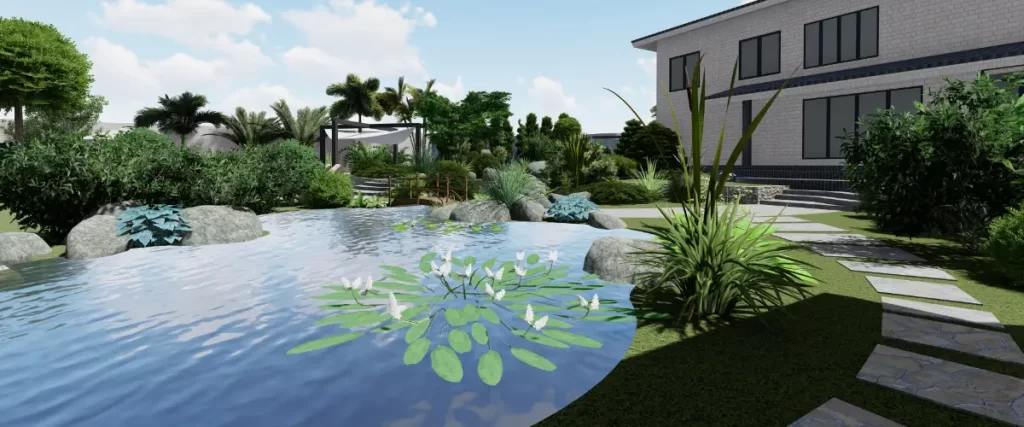
3D landscape design plans let you see your future outdoor space before anyone digs a single shovel into the ground. You can walk through your new outdoor living area virtually, spot problems, make changes, and feel confident about decisions while everything’s still digital and cheap to modify.
Let’s talk about how this technology actually saves you real money.
Reason #1: You Catch Expensive Problems Before Construction Begins
Here’s the thing about landscape mistakes. They’re incredibly expensive to fix once work begins. Moving a patio after the concrete’s poured? Relocating that retaining wall because it blocks the view you didn’t realize existed? Ripping out plants that looked great on paper but overwhelm the space in reality? Each change costs serious money.
With 3D landscape design, you see spatial relationships between all the elements before breaking ground. That seating area you thought would fit perfectly? The 3D model shows it’s actually cramped.
The water features you wanted might dominate the space instead of complementing it. The sight lines from your kitchen window reveal issues a flat plan never would.
What You Can Spot Early:
- Spacing problems between furniture and walkways
- Scale issues with plants that grow larger than expected
- Sight line conflicts that block views you care about
- Access challenges for maintenance or future changes
- Lighting placement that creates weird shadows or dark spots
You can view your design from multiple angles and at different times of day. Walk virtually through the space. See how tall those plants actually get. Understand how that pergola affects afternoon shade. This level of detail helps you make better decisions about layout, materials, and plant selection.
Making changes in the design phase costs almost nothing compared to mid-construction modifications. Your designer adjusts the digital model in specialized software. You review it again. Repeat until everything works perfectly. No wasted materials, no labor costs for redoing work, no frustration.
Reason #2: Better Communication Means Fewer Costly Misunderstandings
Traditional landscape plans require interpreting 2D drawings. Even professionals sometimes struggle with this. For non-professionals, it’s basically reading a foreign language. You nod along during presentations hoping you’re understanding correctly, but you’re really just guessing what the final result will look like.
| Design Method | Homeowner Understanding | Change Orders | Average Cost Overrun |
| 2D Plans Only | 40-60% clarity | 3-5 per project | 15-25% over budget |
| 3D Visualization | 85-95% clarity | 0-1 per project | 5-10% over budget |
Misunderstandings between homeowners and landscape designers lead to expensive problems. You thought the patio would be bigger. The designer assumed you understood the tree would partially block the fire pit. Nobody realized the outdoor living space wouldn’t connect well with the house until construction was halfway done.
3D designs eliminate most of this confusion.
You see exactly what you’re getting. The flower bed dimensions are clear. How different elements relate to each other makes sense visually. You can point at specific features and say “make that bigger” or “move that over there” without anyone needing to translate vague descriptions into technical drawings.
This clear communication extends to contractors too.
The construction team sees detailed 3D views showing exactly what needs building. They understand the designer’s vision without guesswork. Fewer questions during installation. Less chance of building something wrong. The whole team stays on the same page from start to finish.
Reason #3: You Make Better Material and Plant Choices
Choosing materials for your outdoor area based on small samples is tough. That paver looks great as a tiny square in the showroom, but how does it work across your entire patio? Will those plants feel too busy together? Does the stone for your retaining walls match your house?
3D landscape design lets you test different materials virtually before buying anything. Try various pavers, compare stone colors, swap out plant varieties, experiment with different lighting fixtures. See how everything looks together as a completed project rather than individual components.
Testing Options Without Buying Them:
- Upload photos of material samples into the 3D model
- Compare 3-5 different options side by side in context
- View at different times of day to see how lighting affects colors
- Check seasonal variations with plants at different growth stages
- Get feedback from family before anyone commits money
This testing phase saves money in two ways. First, you avoid buying materials you end up hating once installed. Returns and exchanges cost money even when possible, and some materials can’t be returned at all once cut or installed. Second, you often discover less expensive alternatives that look just as good in context.
Plants represent another area where 3D design saves money. Landscape designers can show you how plants will look at maturity, not just at planting time.
That helps prevent overcrowding, which means buying the right quantity from the start. You also see seasonal changes, understanding how your space will look year-round before committing to a plant palette.
The ability to visualize different layouts helps with budgeting too. Maybe your dream landscape exceeds your budget in its full version. The 3D model lets you explore which elements matter most and what could wait for a future phase. You make informed decisions about where to spend and where to scale back.

Reason #4: Projects Stay on Budget and Schedule
Landscape projects going over budget and timeline are practically industry standard. Change orders, unexpected site conditions, miscommunication, and design modifications during construction all push costs higher and drag timelines longer. The waiting time between starting and finishing stretches from weeks into months.
3D landscape planning reduces these delays and cost overruns significantly. Thorough site analysis combined with detailed 3D modeling catches potential issues during the design process.
Your team discovers that drainage problem before it becomes a mid-construction crisis. The lighting placement gets finalized before electricians show up. Plant quantities are calculated accurately.
When everyone knows exactly what’s being built, the construction phase runs smoother:
- Contractors provide accurate bids because they fully grasp the scope
- Material orders happen correctly the first time around
- Installation sequences make sense because the team understands connections
- Fewer delays from questions about design intent or specifications
- Better coordination between trades working on different project elements
According to data from the National Association of Landscape Professionals, projects with detailed planning and clear visualization have significantly fewer change orders and timeline extensions. That’s money staying in your pocket instead of going toward fixing avoidable problems.
Smaller projects benefit from this planning approach just as much as major renovations. Even a simple patio addition or flower bed redesign goes smoother when you’ve thought through all the details beforehand.
Reason #5: You Get Higher Value from Your Investment
A well-designed outdoor living space adds serious value to your property. But poorly executed landscape projects can actually hurt your home’s appeal and resale value. Spending money on landscaping that doesn’t enhance your property is obviously a waste.
3D landscape design helps create a cohesive final design that looks professionally planned because it is professionally planned. You see how each element contributes to the overall aesthetic. The balance between hardscape and plantings makes sense. The flow from one area to another feels natural.
This level of polish affects how you and potential future buyers perceive your property. Your outdoor space becomes a true extension of your home rather than a random collection of features someone added over time. The visual appeal and functionality both increase.
What Adds Real Value:
| Feature | Traditional Planning | With 3D Design |
| Cohesive Design | Hit or miss | Consistently high |
| Material Harmony | Often mismatched | Tested together visually |
| Proper Scale | Frequent mistakes | Accurate from start |
| Functional Flow | Afterthought fixes | Built into design |
| Overall Satisfaction | 60-70% | 90-95% |
You’re also more likely to love what you get, which means you’ll maintain it better and use it more. Landscapes that meet the customer’s expectations get care and attention. Disappointing results get neglected, which wastes the initial investment.
Technology in the landscaping industry continues advancing, making 3D design more accessible and detailed.
Specialized software now includes features like virtual reality walkthroughs and augmented reality views that overlay designs onto your actual property through your phone. These tools give you even better understanding before committing to your dream property transformation.
Making the Smart Choice
After learning about all these benefits of 3D landscape design, you might feel ready to start your project with confidence. Or maybe you’re thinking this sounds complicated and wondering how to even find designers who use this technology. Both reactions make sense.
3D design requires specialized software, training, and experience to do well. Finding landscape designers who truly leverage this technology to benefit clients takes research. You need someone who uses 3D as a communication and planning tool, not just a flashy sales gimmick.
You’re also juggling questions about your budget, timeline, which features matter most, and how to phase a project if you can’t do everything at once. That’s a lot to figure out while also trying to understand design software and visualization technology.
Let’s Create Your Vision Together
At Land Designs by Colton, 3D landscape design forms the foundation of how we work with clients.
We use advanced visualization technology to show you exactly what your new outdoor space will look like before construction starts. You see your ideas come to life digitally, we refine the plan together, and then our construction team builds precisely what we designed.
This approach eliminates the guesswork and costly surprises that plague traditional landscape projects. You’ll know your budget, timeline, and final result before we move any dirt.
Our landscape design-build combine cutting-edge design technology with hands-on construction expertise to deliver outdoor spaces that exceed expectations.
Why risk expensive mistakes and budget overruns with outdated planning methods? Call us at (720) 580-3677 or message us here to start visualizing your dream landscape in stunning 3D detail. Let’s build something amazing together, with the confidence that comes from seeing your investment before committing to it.