

Year-round landscaping in Colorado is absolutely achievable, but it requires a different design philosophy than what works in wetter, more forgiving climates.
If your Denver landscape isn’t designed with all four seasons in mind, you’re building something that looks good for three months and limps through the other nine.
Below is a season-by-season breakdown of what actually works here, along with plant categories and hardscape strategies that earn their keep all year.
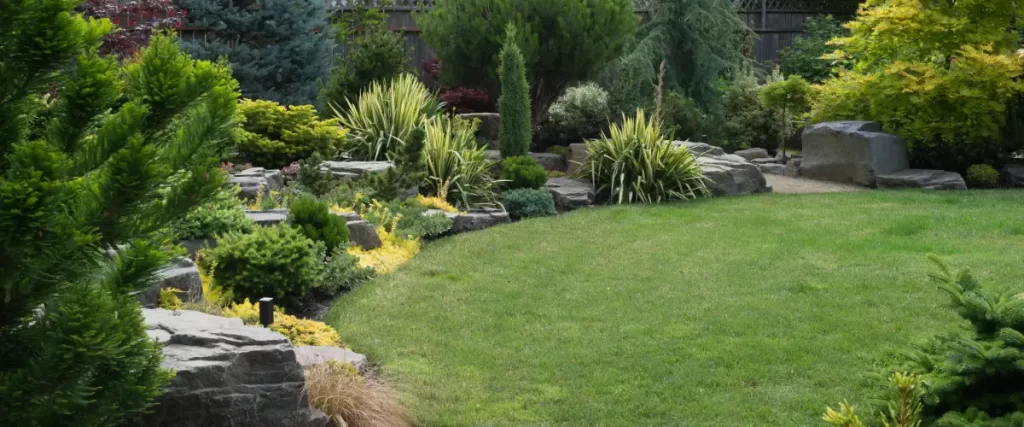
Designing for Colorado’s Four Seasons (2026 Update)
Denver gets roughly 3,100 hours of sunshine per year, making it one of the sunniest major cities in the country.
That sounds like a bonus until you factor in the UV intensity hammering plants that aren’t climate-adapted, and the semi-arid conditions that keep soil dry even after a good rain.
The goal of four-season landscape design isn’t to keep everything green all year. It’s to make sure something is always working, whether that’s foliage, texture, bark color, or hardscape structure:
- Evergreens anchor the layout.
- Deciduous trees give you dramatic seasonal shifts.
- Ornamental grasses carry movement and seed-head interest into winter.
- The hardscape holds everything together when plants step back.
Spring: What Works in Denver Metro’s Wet/Dry Spring
Spring in Denver is genuinely unpredictable. Snow is possible through April, and sometimes into May. Meanwhile, a warm March stretch can trick early-blooming plants into exposure before the last frost.
- Tulips and daffodils, planted in fall, push through cold soil and deliver some of the first real color of the year.
- Native columbines handle both the temperature swings and the alkaline clay soils common across the metro.
- Low-growing ground covers like creeping phlox also fill bare spots while holding soil moisture as things thaw out.
Spring is also when your irrigation system needs attention.
May is Denver’s wettest month, with about 2.32 inches of precipitation, but things dry out quickly by June. Setting up a smart controller before summer arrives saves headaches and water bills.
Apply two to three inches of organic mulch around planting beds now, and you’ll reduce weed pressure and protect soil temperature for the rest of the season.
Summer: Heat, UV, and Smart Irrigation Strategies

In mid-July, Denver averages highs around 91°F. For ornamentals without drought adaptation, summer is a stress test that many plants won’t pass. Smart irrigation is what separates a landscape that thrives from one that needs constant replacement.
Drip systems and zone-specific controllers let you group plants by similar water needs, which means you’re not overwatering drought-tolerant species to keep thirstier ones alive.
Denver has issued mandatory outdoor watering restrictions during recent drought years, so a water-wise design approach gives you a genuine long-term advantage, not just a conservation talking point.
Russian sage and lavender are summer workhorses. They bloom long, handle intense UV, and ask very little beyond a well-drained spot. Sedums fill rock gardens without demanding irrigation attention.
Grouping these together in defined planting beds keeps maintenance low and the design cohesive.
Fall: Color Plants That Hold Through November
Fall is Colorado’s most underestimated season for landscape design.
Aspens turn gold, ornamental grasses peak with feathery seedheads, and late-blooming shrubs like rabbitbrush light up the landscape as most other plants wind down.
Rabbitbrush’s silver-gray foliage looks good all season, and it produces bright yellow flowers in September and October that are among the most important late-season nectar sources for native bees in the region.
Ninebark shrubs offer colorful fall foliage and small fruit. Asters bloom from late summer well into November in warmer years and come in a range of sizes that fit any planting bed.
Winter: Structural Beauty Through Snow Season
Denver’s snow season averages about 53.8 inches of accumulation and runs from mid-October through late April. If you design well for winter, you’re covering nearly half the year.
Evergreens, stone pathways, and hardscape become the backbone of the landscape during this period.
Colorado blue spruce, juniper, and pine maintain color and structure throughout. Red twig dogwood offers vivid bark color that reads beautifully against snow.
Ornamental grasses, left standing through winter rather than cut back in fall, hold their seed heads and add movement even on still days.
Stone and paver surfaces earn their value in winter, too. A well-installed paver walkway handles freeze-thaw cycles without cracking, which matters in a climate where overnight temps can swing 30 degrees from an afternoon high.
Plant Categories for Year-Round Beauty
Evergreens
Colorado blue spruce, Eastern red cedar, and juniper cultivars provide year-round green, structural mass, and wind protection.
Grouping them on the north and west sides of a property shields other plantings from harsh winter exposure while maintaining visual weight throughout the dormant season.
Native Ornamental Grasses
Blue grama (Bouteloua gracilis) is Colorado’s state grass and one of the most underused landscaping assets in the Denver area.
It uses roughly one-third of the water that Kentucky bluegrass requires, tolerates clay soil, and produces distinctive curling seed heads in late summer that carry visual interest into winter.
Little bluestem turns copper-bronze in fall, striking against green evergreens. Both are low-maintenance once established.
Drought-Tolerant Perennials
| Plant | Bloom Season | Water Need | Hardiness Zone |
| Russian Sage | Summer–Fall | Very Low | Zone 4 |
| Blanket Flower | Summer | Low | Zone 3 |
| Rocky Mountain Penstemon | Spring–Summer | Low | Zone 3 |
| Native Yarrow | Summer | Very Low | Zone 3 |
| Sedum | Late Summer–Fall | Very Low | Zone 3 |
Plant Select, a nonprofit collaborative between Colorado State University and Denver Botanic Gardens, identifies Rocky Mountain Penstemon, Blanket Flower, and Native Yarrow as top performers in Denver’s clay soils and semi-arid conditions.
They’re available at Front Range nurseries and tolerate alkaline pH without amendment.
Hardscape Elements for Year-Round Function
In a Colorado landscape, hardscape holds the design together when plants go dormant for months:
- Stone retaining walls create planting terraces, solve drainage problems on slopes, and add visual weight year-round.
- Paver patios extend usable outdoor space into fall and early spring when a bare lawn wouldn’t encourage anyone outside.
- Landscape lighting extends the livability of your outdoor space into winter evenings, when short days would otherwise mark the end of outdoor use entirely.
FAQ: Year-Round Landscape Design in Colorado
How do I keep my yard looking good in Denver winters?
Focus on structure first. Plant evergreens as year-round anchors, install paver pathways or stone features, and leave ornamental grasses standing rather than cutting them back in fall. Red twig dogwood and birch provide bark color that contrasts beautifully against snow.
What is the best low-maintenance grass for Colorado?
Blue grama is the top choice. It uses a third of the water Kentucky bluegrass needs, handles clay soil well, and holds visual interest through its seed heads in fall and winter. Buffalo grass works well in full-sun areas as a turf alternative.
Can I have a colorful landscape without heavy watering?
Absolutely. Drought-tolerant perennials like Russian sage, native yarrow, blanket flower, and Rocky Mountain penstemon all deliver strong seasonal color with minimal irrigation. Grouping plants by similar water needs and using drip systems makes the whole setup genuinely sustainable.
When is the best time to plant perennials in Denver?
Spring planting works well after Denver’s last frost date, which typically falls around early May (May 4th on average, according to NOAA historical data). Fall planting, from September through early October, is equally effective and gives root systems time to establish before winter.
Plan Your Year-Round Landscape with a Denver Metro Landscape Architect
There’s a lot to balance here, and honestly, most homeowners don’t want to spend months researching freeze-tolerant pavers, irrigation zone layouts, and plant sequencing strategies.
At Land Designs by Colton, every project is led personally by Jonathan Colton, a formally trained landscape architect with a degree from Mississippi State University and over 25 years of hands-on experience in the Denver metro area.
Our installation team holds ICPI certification for hardscape work and handles everything in-house, so nothing gets handed off to an unfamiliar crew. With over 500 landscapes completed across the Denver area, we’ve seen nearly every Colorado climate challenge.
Call us at (720) 580-3677 or message us here to get started.