Designing a Paver Patio for Denver’s Altitude and Climate (2026 Design Guide)

Land Designs by Colton

Owners & Landscape Design-Build Team | Denver Metro, CO

At a mile high, Denver asks more of an outdoor surface than almost any city in the country. The UV is stronger, the ground moves more aggressively in winter, the hail shows up uninvited, and the clay soil under most metro properties holds water in all the wrong ways. 

A paver patio here is a deceptively simple project. The difference between one that holds up for 20 years and one that starts shifting after the second winter comes down to decisions made before the first paver is ever set.

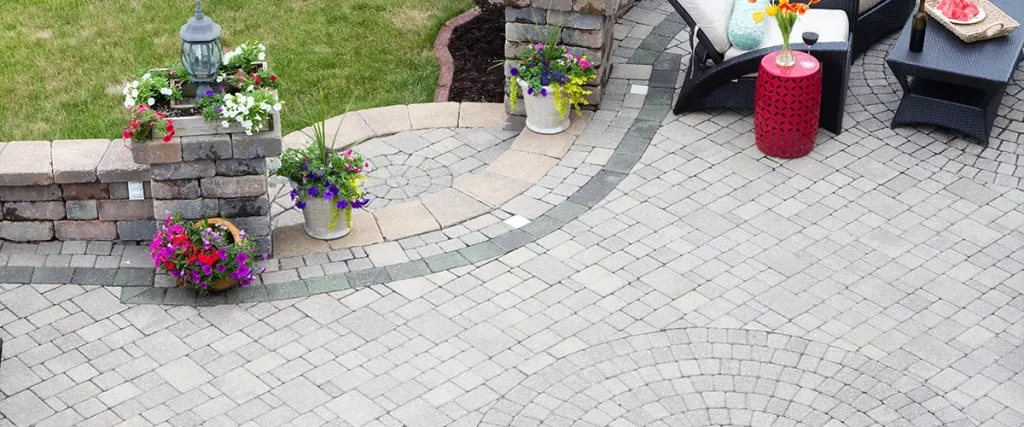
Outdoor paver patio with built in grill, dining area and custom backyard hardscape design

Why Designing a Paver Patio for Denver Is Different

5,280 Feet of Elevation, 245-Plus Sunny Days, and Freeze-Thaw Cycles

Denver averages about 245 to 252 sunny days per year, well above the national average of 205, and at 5,280 feet, the atmosphere filters less solar radiation than at lower elevations. 

On peak summer days, Denver’s UV index regularly reaches 9 to 10 on the NOAA scale, rated “Very High” by the World Health Organization. Materials that hold color fine at sea level can chalk and fade here within two or three seasons if they weren’t formulated for that intensity.

The bigger concern, though, is what happens between October and March. Denver’s Front Range sees temperature swings, with daytime highs in the 50s and 60s dropping to single digits overnight. 

Water enters pores and cracks in any surface material, freezes, expands, thaws, and the process repeats. Applied to a poorly prepared substrate, that cycle is what buckles patios.

Soil and Drainage Realities

Most Denver metro lots sit on expansive clay subsoil that retains water and shifts during freeze-thaw cycles.

Combined with snowmelt runoff (especially on sloped foothills properties or in neighborhoods like Green Valley Ranch), drainage must be a primary design concern.

The Climate Forces Acting on Your Patio

UV Exposure and Color Fade

Darker-pigmented pavers absorb more radiation and fade sooner at altitude. 

Choosing a product line with UV-stable pigments, from manufacturers like Techo-Bloc or Belgard, is a key design decision.

Freeze-Thaw Cycles and Substrate Movement

Contractor installing interlocking concrete pavers for a custom patio and walkway project

A paver is only as stable as what’s underneath it. 

When the ground heaves, a properly built base with adequate compacted aggregate depth absorbs that movement without transferring it into the surface. A thin or under-compacted base lets that pressure translate into shifting, tilting, and cracked pavers.

Hailstorm Impact

According to the NOAA National Severe Storms Laboratory, Nebraska, Colorado, and Wyoming experience the most hailstorms in the country. Denver consistently ranks among the top cities nationally for hail damage. 

High-density concrete pavers and porcelain handle surface impact from large hailstones far better than softer natural stone.

Wind Exposure on West-Denver and Foothills Properties

Persistent wind dries joint sand faster and erodes traditional sand joints over time. For exposed sites in Jefferson County or west Denver, polymeric sand is standard practice, not an upgrade.

Common Paver Patio Material Choices In Denver

Here’s how the most common paver materials compare for this climate:

MaterialFreeze-ThawUV StabilityHail ResistanceBest For
Concrete Pavers (Unilock, Belgard, Techo-Bloc)ExcellentGood to ExcellentExcellentMost residential patios
Porcelain PaversExcellentExcellentGoodSouth-facing, modern designs
Flagstone / SandstoneFair to GoodGoodFairInformal, naturalistic layouts
Stamped ConcretePoorFairPoorNot recommended for Denver

Concrete Pavers

Products from Unilock, Belgard, and Techo-Bloc are tested to ASTM freeze-thaw standards and manufactured with low water-absorption rates suited to the Front Range. 

The Concrete Masonry and Hardscapes Association sets the installation standards governing how these products perform over time. Contractor certification through these manufacturers means training on proper base preparation, compaction, and joint stabilization.

Porcelain Pavers for UV Stability

Porcelain’s near-zero absorption rate makes it an outstanding performer in freeze-thaw conditions, and it holds color longer under heavy UV than most pigmented concrete options. 

The tradeoff is that smooth finishes can be slippery when wet or icy, so surface texture is an important specification decision for any Denver installation.

Natural Stone

Flagstone and sandstone bring a warmth that manufactured products rarely match. For naturalistic, lower-key layouts, they’re genuinely appealing. The key is selecting stone with low porosity and sealing it at installation. 

For a closer look at how flagstone holds up in Denver’s conditions, our blog on flagstone patios and design considerations covers the tradeoffs in more detail.

Stamped Concrete (Avoid)

Stamped concrete is a monolithic slab with a decorative surface layer. When freeze-thaw pressure shifts the substrate, the slab cracks, and the decorative surface cracks with it. 

Pavers can be lifted individually, the base regraded, and the surface reset without compromising the installation.

Construction Decisions That Make the Difference

Substrate Depth and Compaction

The ICPI specifies a minimum of 4 inches of compacted aggregate base for pedestrian areas on well-drained soils. Denver’s clay-heavy subsoil and freeze-thaw conditions push that number higher. 

For most residential patio projects in the metro area, 6 inches is the appropriate starting point, and on particularly expansive or poorly draining clay sites, 8 inches is warranted. 

Edge Restraint and Joint Stabilization

Without solid edge restraint, a paver field migrates outward over time, opening joints and allowing weed intrusion. 

On wind-exposed sites, polymeric sand with a UV-stable binder performs far better than plain sand in maintaining joint integrity over multiple winters.

Slope and Drainage Built Into the Design

A consistent 2% cross-slope moves water off the surface and away from the structure. 

On some properties, that means a dedicated drainage channel or French drain to handle snowmelt properly.

Sealing Protocol

Applying polymeric sand between brick pavers for patio sealing and long lasting joint stability

Current guidance from major paver manufacturers is to wait at least 30 days after installation before applying sealer, allowing polymeric joint sand to cure and natural efflorescence to clear from the surface. 

Overly aggressive sealers applied before the surface has properly dried can trap moisture and accelerate the very damage you’re trying to prevent. 

For certain natural-look concrete pavers rated for unsealed use, skipping the sealer entirely is a valid option.

Designing the Whole Outdoor Space, Not Just the Patio

The patio is the floor, but the design conversation covers everything sitting on top of it. 

Pergola positioning for afternoon shade, fire feature placement, whether a built-in kitchen needs its own structural base, and how outdoor lighting extends usable hours through Colorado evenings. 

In Denver’s climate, a fire pit can extend your outdoor season. If that’s part of your vision, our guide on custom fire pit design for Colorado outdoor spaces is worth reading before your design consultation.

FAQ

Do pavers hold up to Denver’s freeze-thaw cycles better than poured concrete?

Yes. Pavers function as an interlocking system with flexible joints, meaning individual units can accommodate small amounts of ground movement without cracking the surface. A monolithic concrete slab has no such tolerance and is significantly more likely to crack when the substrate shifts.

How deep should the base be for a paver patio in Denver?

The ICPI specifies 4 inches as the minimum for pedestrian applications on well-drained soils. Given Denver’s clay subsoil and freeze-thaw conditions, 6 inches of compacted aggregate base is more appropriate for most residential patios, and 8 inches for clay-heavy or sloped sites. The sand setting bed adds roughly an inch above that.

Will porcelain pavers be slippery in snow and ice?

Textured or brushed finishes meet standard anti-slip ratings for outdoor use. Smooth or polished finishes can be hazardous when wet or icy, so surface texture is a specification choice that matters in Denver specifically.

How often do paver patios in Denver need resealing?

Every two to four years for most concrete pavers, depending on sun exposure and foot traffic. South-facing installations at altitude tend to need more frequent attention because of UV intensity.

Can new pavers be matched to an existing patio?

Often, yes, with some limitations. Manufacturers update product lines, and exact matches from five or more years ago may require a close equivalent rather than an identical product. Documenting your current product details sooner makes future matching considerably easier.

You’ve Read the Manual, We Build the Thing

There’s a lot to here, and it only gets more complicated once the actual site conditions show up. If at some point this starts to feel like too much detail for a space you just want to enjoy, that’s understandable. 

Our paver patio installation page covers what Land Designs by Colton brings to the process, and if you’d rather just talk it through, call us at (720) 580-3677 or message us here.

land designs by colton

Owners & Landscape Design-Build Team | Denver Metro, CO

Jonathan and Flavia Colton are the owners of Land Designs by Colton, a family-owned landscape design and build company serving the Denver metro area. Jonathan holds a Landscape Architecture degree from Mississippi State University and is the architect behind every custom design. Flavia handles client communication and project coordination, making them your only point of contact from first consultation to final walkthrough. The team specializes in hardscaping, paver patios, outdoor kitchens, xeriscaping, lighting, and full backyard transformations.