

Living in the Mile High City comes with unique challenges for anyone trying to create a beautiful outdoor space. Many Denver residents look at their compact yards and wonder how to make them functional, attractive, and manageable, given Denver’s climate.
The good news? Small spaces offer opportunities that larger landscapes sometimes miss.
Denver’s dry climate, intense sun exposure, and unpredictable weather patterns require thoughtful planning. You can’t just plant whatever looks pretty at the garden center and hope for the best.
The plants that thrive in other parts of the country often struggle here. But once you understand what works in Colorado’s climate, transforming your small yard becomes an exciting creative project.
Understanding Your Space and Denver’s Growing Conditions
Before selecting a single plant or hardscape element, spend time observing your yard. Morning sun hits differently than afternoon sun. Some corners stay damp longer after watering, while others dry out quickly. These patterns determine which plants will flourish where.
Denver sits at high altitude with intense UV exposure. The growing season runs shorter than many regions, typically from late spring through early fall. Soil type varies throughout the city, though many areas have clay-heavy soil that drains poorly. A soil amendment improves drainage and helps plant growth significantly.
The Colorado State University Extension provides detailed information about soil testing and amendments specific to our region. Getting your soil tested takes the guesswork out of what your yard needs. This small step prevents wasted money on plants that never stood a chance.
Choosing Plants That Actually Survive Here
Drought-resistant plants form the backbone of successful Denver landscapes. Fighting against our dry climate means constant watering, high bills, and inevitable frustration. Working with drought tolerant plants creates a beautiful yard that doesn’t require babysitting.
Native plants evolved here over thousands of years. They handle our soil, temperature swings, and limited precipitation naturally. These plants also attract pollinators like bees and butterflies, which makes your garden more vibrant and supports local ecosystems.
Some reliable choices include:
- Blue grama grass for lawn areas needing less maintenance than Kentucky bluegrass
- Buffalo grass which needs far less water than traditional turf
- Pale purple coneflower adding color while handling drought conditions beautifully
- Yucca glauca providing architectural interest with minimal care
- Native grasses that move gracefully in the wind and look stunning year-round
Ground covers solve multiple problems at once. They fill space, prevent weeds from taking over, reduce soil erosion, and retain soil moisture better than bare dirt.
Creeping thyme releases fragrant flowers when you walk on it and tolerates foot traffic reasonably well. Ice plant provides vibrant color in full sun locations where other plants burn out.
Creating Vertical Interest in Compact Spaces
When your available space feels limited horizontally, go vertical. A vertical garden maximizes planting area without consuming precious square footage. Wall-mounted planters attach to fences or exterior walls, creating living artwork that draws the eye upward.
Climbing plants transform boring walls and fences into green focal points. Virginia creeper provides spectacular fall color and grows vigorously in Denver.
Other climbing varieties suited to our conditions include certain clematis varieties and honeysuckle species. Just make sure whatever you choose can handle Denver’s temperature extremes.
Taller plants positioned strategically create privacy and define different areas within your small yard. Grouping plants by height generates visual interest while making the space feel larger. Place taller specimens toward the back or sides, with progressively smaller plants moving forward. This layering technique adds depth that flat planting beds lack.

Designing Functional Outdoor Rooms
Think of your yard as an extension of your living space. An outdoor room serves specific purposes, whether that’s dining, relaxing, or gardening. In small Denver yards, multifunctional design makes every square foot count.
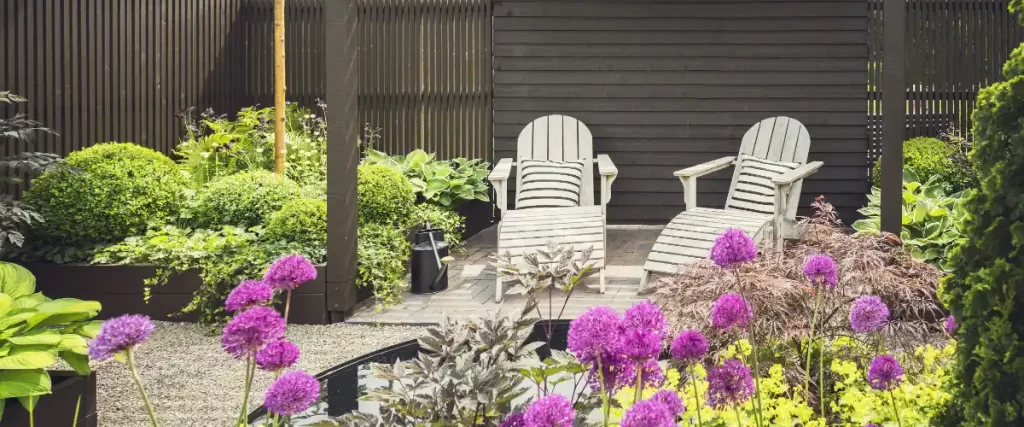
A seating area doesn’t require much space. A small patio with two chairs and a side table creates an inviting spot for morning coffee. String lights overhead add ambiance for evening use. Surrounding this area with drought-tolerant plants and fragrant flowers makes it feel like a private retreat.
Planter boxes let you grow a vegetable garden even when ground space is limited. Raised beds warm up faster in spring, extending our already short growing season slightly.
You control the soil quality completely, which helps in areas with challenging native soil. Herbs, lettuce, tomatoes, and peppers all grow successfully in containers or raised beds.
Gravel mulch or wood chips between planted areas reduce maintenance by suppressing weeds. Gravel particularly suits Denver’s climate since it doesn’t decompose and doesn’t blow away easily.
Some people love the clean, contemporary look of gravel. Others prefer the softer appearance of wood chips. Both work well for water-efficient landscaping.
Incorporating Hardscape Elements
Recycled materials add character while being environmentally conscious. Reclaimed wood creates unique planter boxes or edging. Broken concrete pieces arranged artfully become a crevice garden where small plants nestle between stones. These design features add texture and interest without overwhelming a small space.
Pathways guide movement through your yard while protecting plants from foot traffic. In tight spaces, a winding path makes the area feel larger than a straight shot from point A to point B. Your eye follows the curve, creating the illusion of more space.
Rain gardens manage stormwater runoff while creating a beautiful planted area. Denver gets sudden intense storms that overwhelm drainage systems. A shallow depression filled with appropriate plants captures water, lets it soak in slowly, and prevents soil erosion. Native grasses and certain perennials thrive in rain garden conditions.
Front Yard Transformations
Your front yard creates curb appeal and sets the tone for your entire property. Many Denver residents still maintain traditional lawns that guzzle water and require constant mowing. Replacing even part of your lawn with drought-resistant alternatives cuts maintenance dramatically.
Buffalo grass provides a lawn-like appearance while needing a fraction of the water Kentucky bluegrass demands. It stays green with minimal irrigation and doesn’t require weekly mowing. Some homeowners mix buffalo grass with blue grama for varied textures that still read as a cohesive lawn area.
Alternatively, eliminate traditional turf entirely. Ground covers like creeping thyme create a living carpet that needs no mowing. Strategic placement of rocks, gravel paths, and planted beds transforms a generic front yard into something memorable.
Group plants with similar water needs together. This principle, called hydrozoning, lets you water efficiently without overwatering some plants or underwatering others. New plants need more regular water until their root systems establish. Once established, drought tolerant species need far less attention.
Adding Personality and Polish
Seasonal blooms provide changing interest throughout the year. Many drought-resistant plants flower beautifully. Purple coneflowers, yarrow, and black-eyed Susans bring color without demanding excessive water. Planning for varied bloom times means something always looks good.
Plant varieties with different foliage colors and textures create visual interest even when nothing’s flowering. Silver-leafed plants contrast beautifully with deep green specimens. Ornamental grasses add movement and a completely different texture than broad-leafed perennials.
A living wall takes vertical gardening to another level. These structures support numerous small plants in pockets or containers, creating a dramatic focal point. They work particularly well in courtyards or on bare walls that need softening. Proper irrigation setup keeps maintenance manageable.
Deep roots help plants access water during drought conditions. Encouraging deep root growth by watering less frequently but more thoroughly creates healthier, more resilient plants. Shallow, frequent watering trains roots to stay near the surface where they’re vulnerable to heat and dry conditions.
The Reality of DIY Landscape Design
Look, transforming a small yard in Denver takes real knowledge about plants, design, and our specific conditions. You’re balancing aesthetics with water restrictions, maintenance realities, and making sure everything actually survives our wild temperature swings. Reading about it is one thing. Actually doing it is completely different.
Professional landscape designers have seen what works and what fails in Denver yards. They know which plant combinations thrive together. They understand how to grade your space so water drains properly instead of pooling against your foundation.
They can look at your awkward corner lot and see possibilities you’d never imagine. If you’re thinking about bringing in someone who really understands Denver landscape design, you might want to check out what a landscape design-build service can do for your specific space.
At Land Designs by Colton, we work with small Denver yards constantly. We’ve figured out how to make tight spaces feel bigger, how to create privacy without blocking light, and how to design yards that look amazing without turning into weekend maintenance nightmares. We get that you want to actually enjoy your backyard instead of constantly working on it.
Why spend months researching, making expensive mistakes, and doing heavy physical labor when you could be enjoying your finished space instead?
Call us at (720) 580-3677 or message us here to discuss transforming your small yard into the outdoor space you’ve been dreaming about. We handle everything from initial design through final installation, creating landscapes that thrive in Denver’s climate while reflecting your personal style.